Product demo · Hotel · voice reception
A voice agent handles the hotel's calls: it checks availability, creates and changes bookings, answers questions and leaves requests for each department. When a person is needed, it transfers the call. We show it with a sample hotel.
· 2 min read
- Industry
- Hotels and accommodation
- Location
- Spain · demo with a sample hotel
- Scope
- Workflow on our platformCustom call flowBooking system connectionRequests to departmentsTransfer to receptionTranscript and cost per callVersions and in-editor testing
- Benefits
- The phone gets answered at night too, and when reception is busy with a guest
- Prices and availability come from the booking system, not from the model's memory
- Requests reach reception, housekeeping or maintenance with the room and the reason
- Every call is kept with its transcript, duration and cost
Phone coverage, including nights and holidays
Steps in the call flow, from greeting to goodbye
Actions in the hotel's system: check, book, look up and request
Direct route to a person, for a complaint, an emergency or on request
Context
At a hotel, the phone rings just as reception is checking someone in. At night there's often only one person on duty, and many calls are the same few questions: is there a room, what time is breakfast, can I park.
This project shows a voice agent built on our internal workflow platform, for that front desk. The hotel, calls, numbers and prices in the screenshots are samples, and the sample calls are in Spanish.
How it works
- A flow, not a script
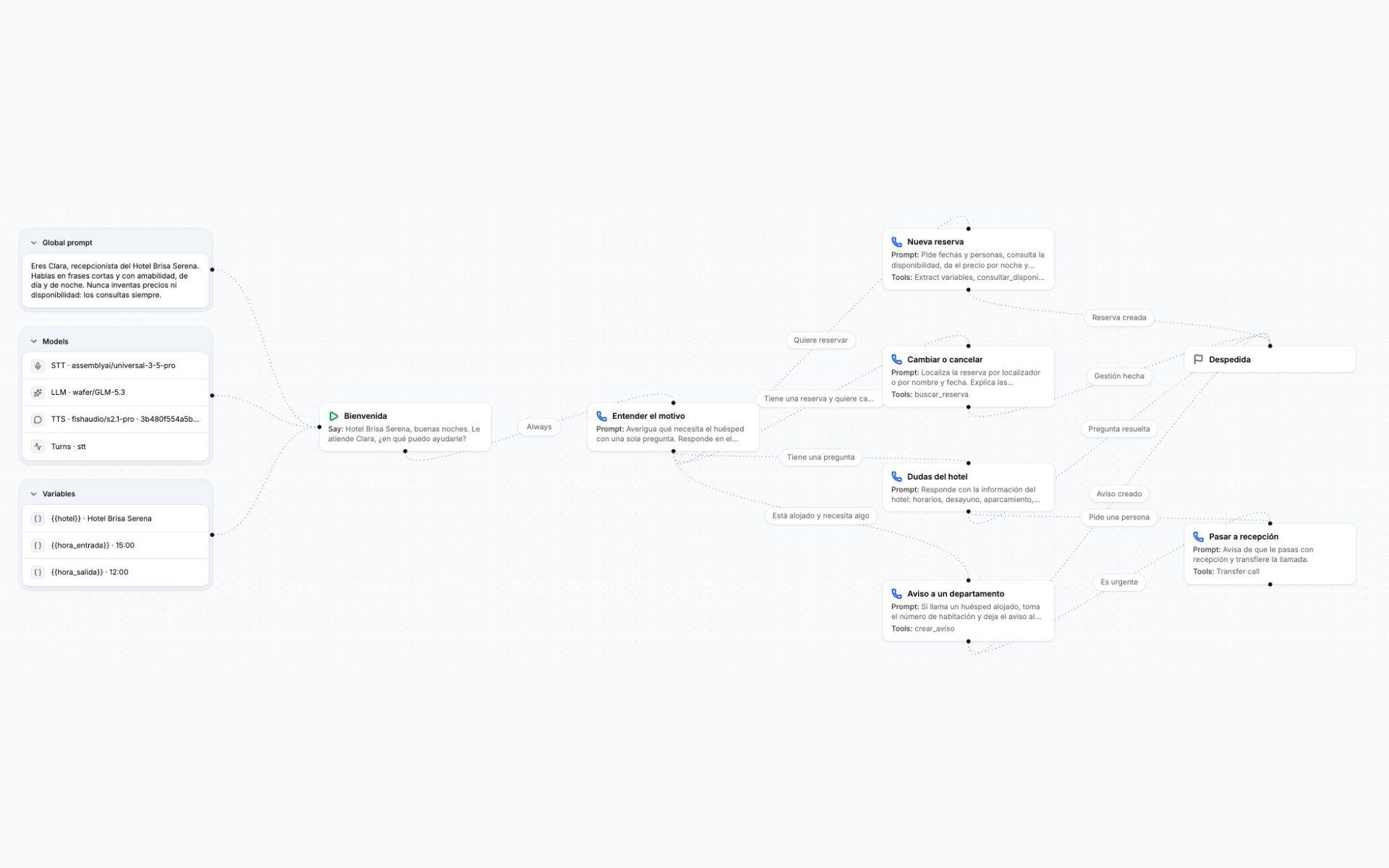
- The call is a graph of steps: greeting, working out the reason, then on to booking, changing, answering a question or leaving a request. Each step has its own instructions and exit conditions, and the team can change them without touching code.
- It checks before it answers
- To give a price or a date, it calls the booking system. The overall instruction is clear: never make up prices or availability.
- It finishes the job
- It creates the booking and gives the reference, finds an existing one to change it, or leaves a request for maintenance with the room number. Dates, nights and other call details are saved as variables.
- It knows when to hand over
- A complaint, an emergency or someone asking for a person goes straight to the reception phone.
- Everything is logged
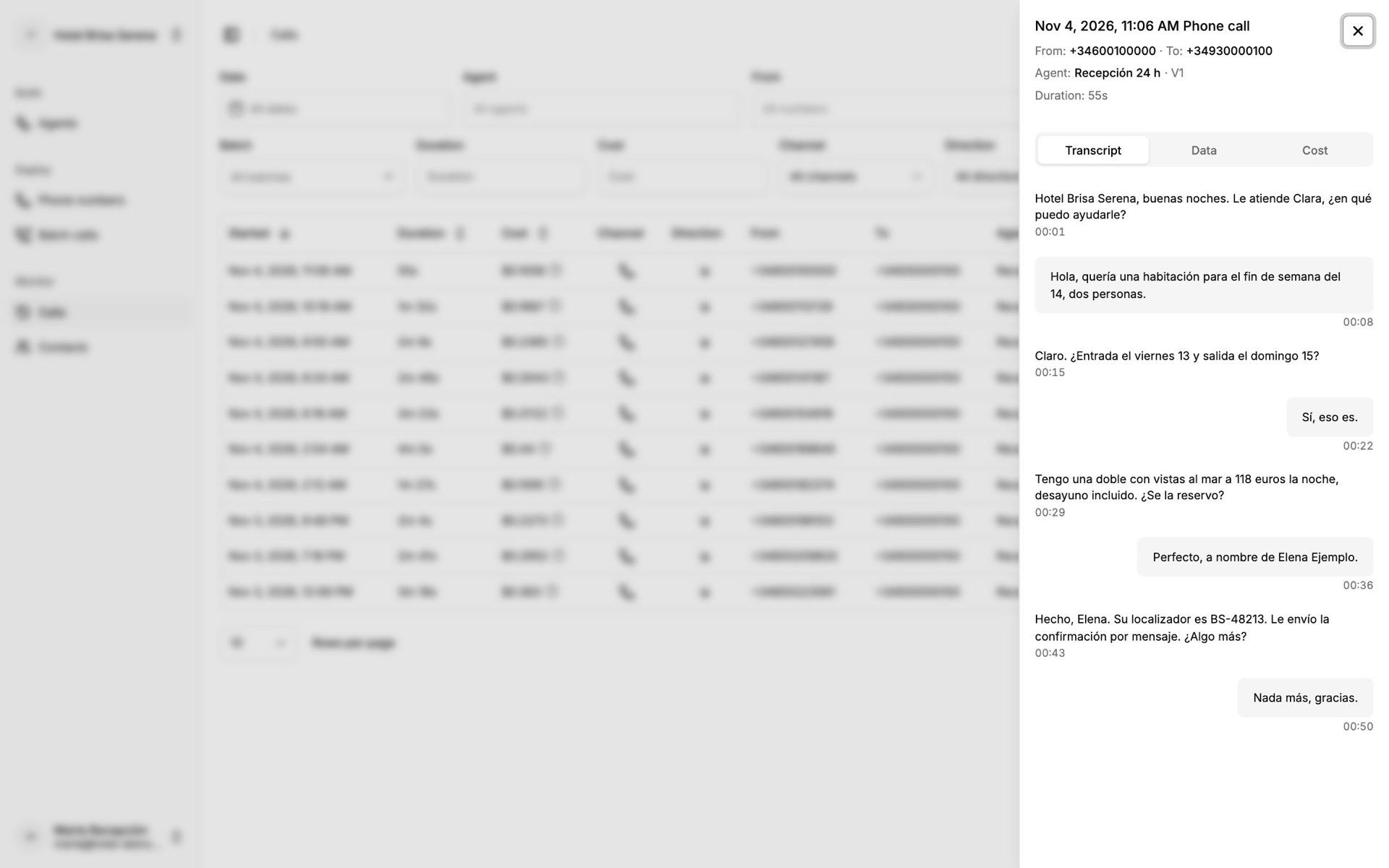
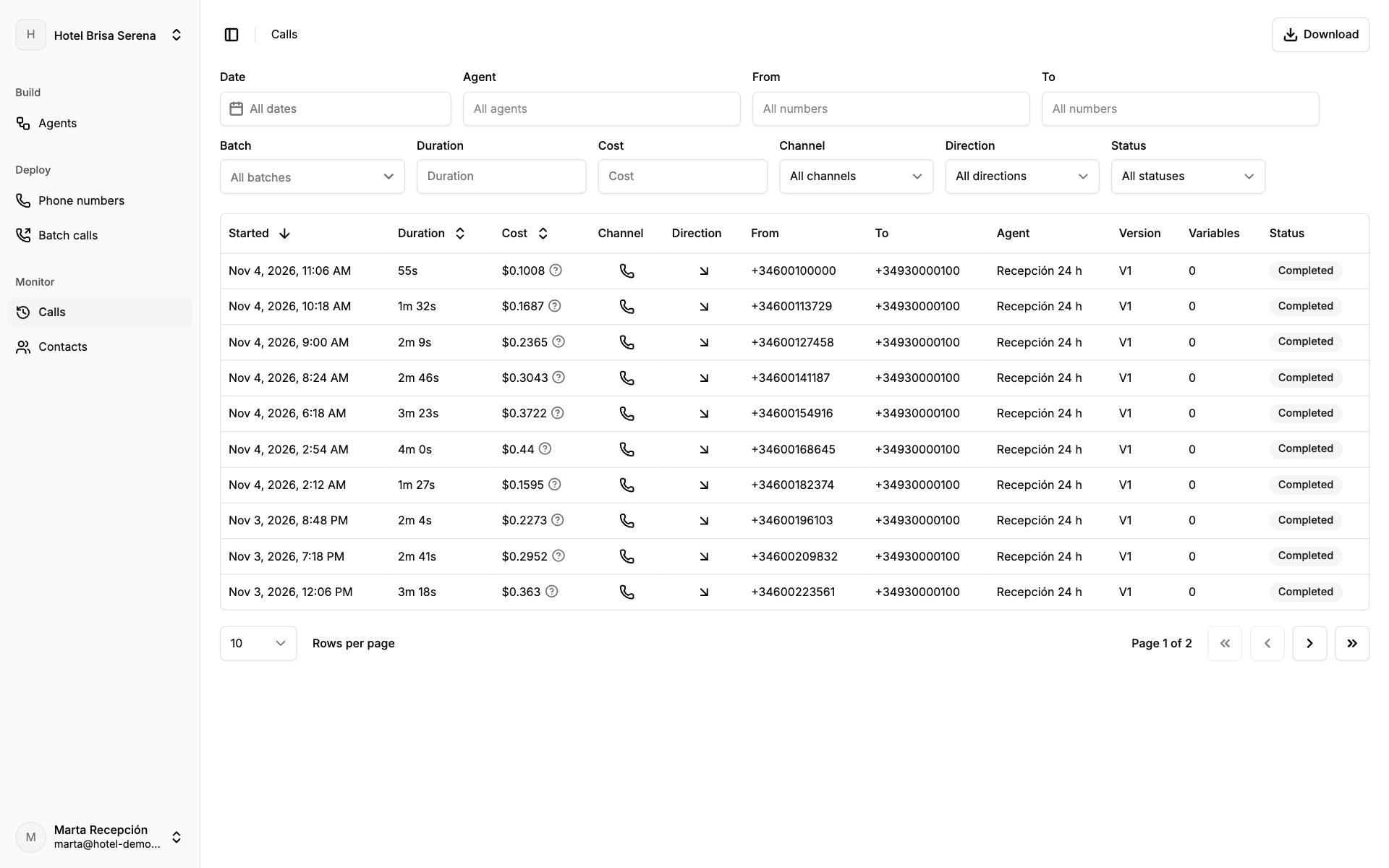
- Each call keeps its transcript, duration, the agent and version that answered it, and its cost broken down by model.
The hard parts
On the phone, every silence shows. The agent decides when the guest has finished speaking, lets itself be interrupted and keeps the thread when that happens. Those timings are set in the configuration, along with the voice, transcription and language models, each with its price per minute.
Changing an agent that's already taking calls is nerve-racking, so every change is tested in the editor before it's published. Published versions stay as they are, and going back to an earlier one means selecting it.
Result
With this agent, a hotel has a number that always answers. Reception keeps what really needs a person, and each morning can read what happened overnight instead of listening to voicemails.
Next step
Are calls going unanswered at your front desk? Let's talk about a voice agent for your hotel.